
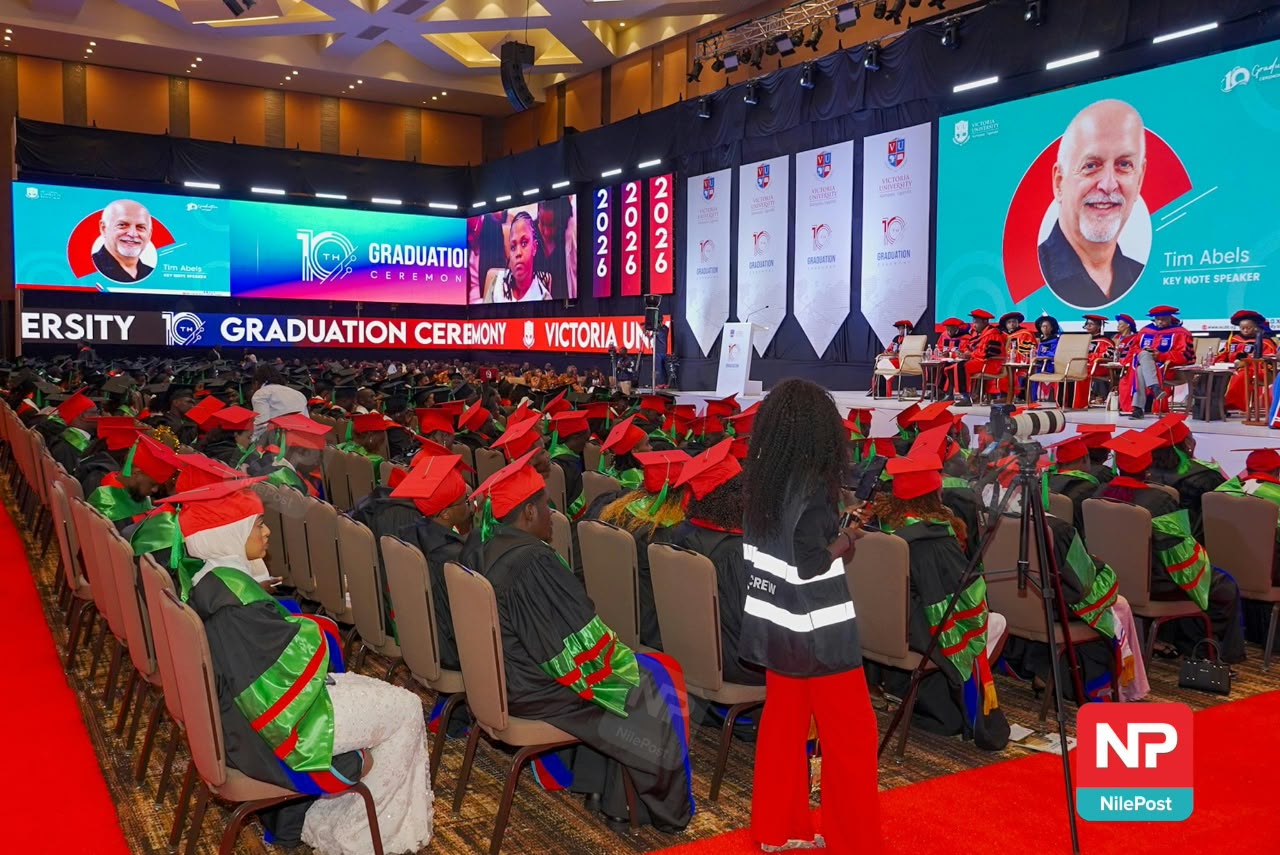
KAMPALA, Uganda — Victoria University has graduated more than 2,500 students during its 10th graduation ceremony at Speke Resort Munyonyo, with university leaders urging graduates to embrace artificial intelligence (AI), innovation and practical skills to remain competitive in a rapidly changing job market.
Held under the theme “The Future Is Here,” the ceremony’s first day featured graduates from the Faculties of Science and Technology and Health Sciences. The event underscored the growing importance of digital literacy, adaptability and hands-on experience in the modern workplace.
According to the university, 89 per cent of the graduates on the first day were already employed, while more than 40 per cent had pursued science-related programmes. The institution attributed this achievement partly to its flexible learning model, which enables students to combine their studies with employment.
Graduates urged to embrace emerging technologies
Victoria University Chancellor Professor John Lawrence Opuda-Asibo encouraged graduates to prioritise practical skills and continuous professional development as artificial intelligence increasingly influences different industries.
He cautioned that failing to understand and adapt to emerging technologies could leave graduates at a disadvantage in an increasingly competitive economy.
Vice-Chancellor Professor Lawrence Muganga echoed the call, highlighting the growing influence of AI, blockchain and other technological advancements on global economic and professional systems.
Muganga urged Africans not to view these developments as distant innovations reserved for other regions. Instead, he challenged graduates to acquire the knowledge and skills necessary to participate in and benefit from the evolving digital economy.
He also emphasised the importance of workplace relationships, advising graduates to understand their supervisors, adapt to different leadership styles and remain open to learning throughout their careers.
According to Muganga, the university’s flexible education model is intended to help students improve their qualifications while gaining valuable professional experience.
Innovation begins with taking initiative
Delivering the keynote address, Tim Abels challenged the graduates to identify their strengths, invest in personal growth and develop a strong interest in research, innovation and independent learning.
He encouraged them to begin working on their ideas instead of waiting for perfect circumstances, noting the importance of taking initiative and developing solutions that address real-world needs.
Abels also highlighted personal health and physical fitness as important elements of long-term professional success, urging graduates to maintain their well-being as they navigate the demands of their careers.
University calls for more entrepreneurs and problem-solvers
Victoria University Council Chairman Dr Joseph N. Biribonwa reaffirmed the institution’s commitment to improving its learning environment and facilities to meet the changing demands of the economy.
He challenged graduates to translate their academic knowledge into practical solutions that benefit society.
Rather than relying exclusively on existing employment opportunities, Biribonwa encouraged them to explore entrepreneurship, establish businesses and create jobs for others.
He emphasised that graduates should become innovators and problem-solvers capable of addressing challenges within their communities and contributing to Uganda’s development.
The graduating students welcomed the milestone and expressed their intention to apply the knowledge and skills acquired at the university to improve lives and address challenges facing the country.
Preparing graduates for a changing economy
The graduation comes at a time when universities face increasing pressure to equip students with skills that align with employers’ expectations and the wider economy.
As artificial intelligence and other emerging technologies reshape professional environments, the need for continuous learning, digital competence and practical problem-solving continues to grow.
Victoria University says it remains committed to preparing graduates to respond to these changes through technology-driven education, innovation and skills development.
The message to the graduating class was clear: academic qualifications are an important foundation, but long-term success will also depend on adaptability, creativity, initiative and the ability to turn knowledge into meaningful solutions.
Source: Nile Post. This is an independently rewritten version of the reported story.

No responses yet